

cake for breakfast vol 2.9
French stereotypes, parenting reassessments, and a bunch of books (incl. Yesteryear, obvi)

Hello hello, it’s been, as the young folks say, a minute. Life has been very busy in the midst of moving admin (we are no longer moving to the house I thought we were moving to last time I wrote, but are hopefully moving to a different one, though we’re still in the things-could-fall-through stage which is unsettling for all of us). Also, there have been SO MANY holidays, the kids have been home A LOT. I often joke that the reason people don’t homeschool in France is because the kids never go to school anyway: as well as having every Wednesday off school, they have two weeks off school four times throughout the school year in addition to the eight week summer break, and many bank holidays. They were off school for the last two weeks of April, and every week of May except for last week has had one or two days off school, on top of the regularly scheduled Wednesdays off.
There’s a stereotype that French people never work and are always either on holiday or having long, multi-course lunches for hours in the middle of the day, and although this isn’t entirely supported by data, it certainly feels that way from May until September. Once the May bank holidays hit, you have the sense that everyone is basically just going through the motions until they can slope off for their month by the sea/in the countryside/in the mountains/whatever. Which, by the way, makes trying to take care of all the bureaucracy involved in moving house even more tedious and frustrating than it usually is. Overall though, I definitely think the French have the right perspective, i.e. that the slower, less harried parts of life are the ones to treasure.
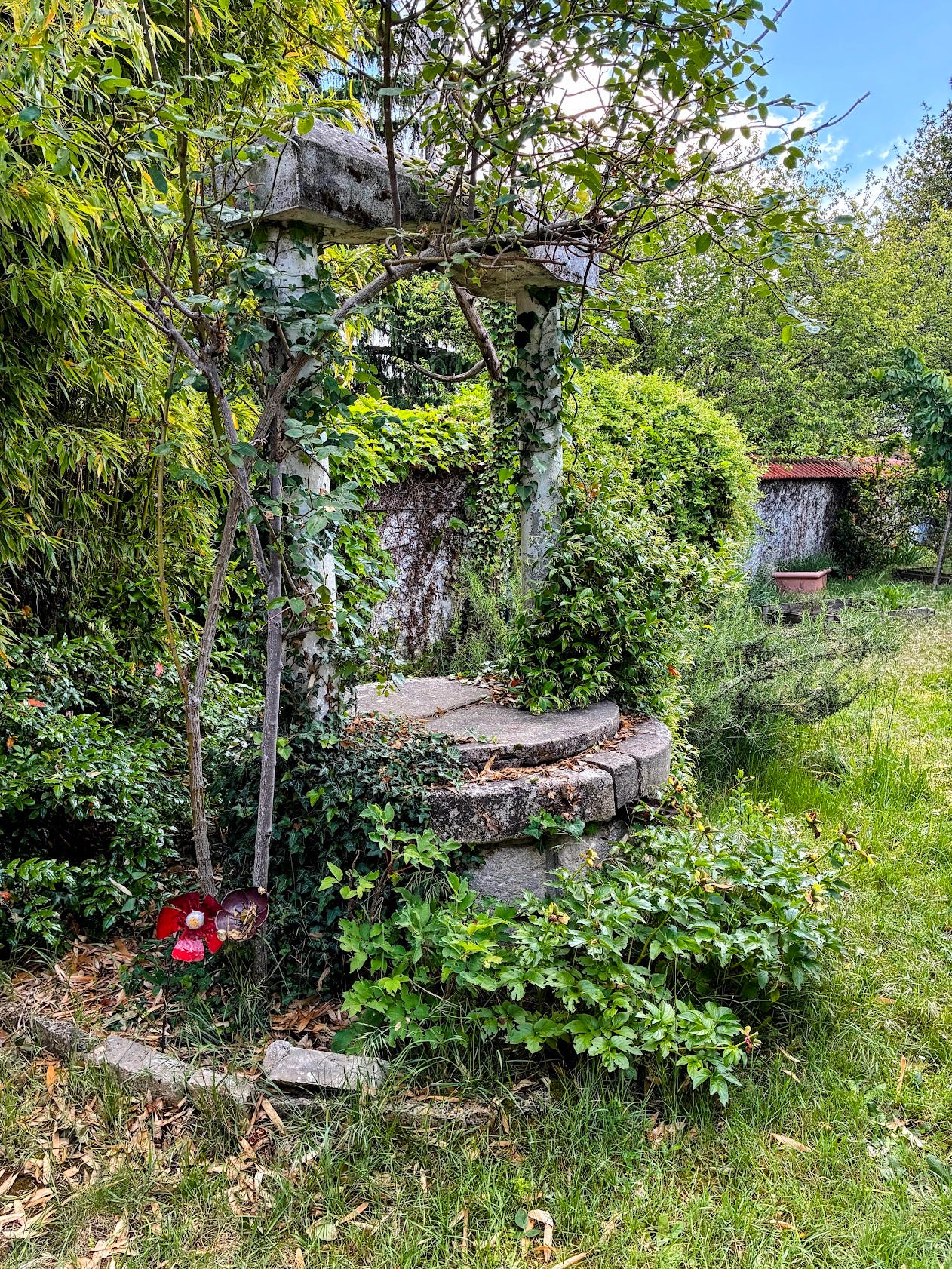
on the home front
Due to the aforementioned combination of trying to sort out a house move + having lots of time off school, we have spent a lot of time at home, all of us together, lately. If it weren’t for the moving admin, we would have gone away at least once for one of the various May long weekends, but we felt like we needed to be around in case we were summoned to sign a document or whatever. As a recap, we live in an apartment in a very urban area, and two of our three kids are extremely energetic, so spending loads of time together at home is not the idyll that some people might think it is/should be (this is partly why we are moving - we desperately need outside space for boys to run laps of).
Now, I have always been pathologically anti-stuff, as in, I make my kids get rid of a bunch of toys before their birthdays/Christmas, I tell family members that if they buy the kids junky toys with loads of small pieces or that make obnoxious noises I WILL THROW THEM IN THE BIN so they’d be better off not wasting their money, and I rarely, rarely can be induced to buy them new things unless there is a very clear need for it. This is partly clutter aversion and partly a desire to teach my kids to make do with what they have instead of expecting/requiring a flow of new things to keep them happy. But, these long days at home under one roof - also, as of the end of last week, in the midst of a heatwave that makes it too hot to be outside after about 10.30am - have forced me to revise my hardline policies a little.
My 8yo daughter is extremely self-sufficient and can while away many hours reading, crocheting, drawing, and all those other lovely introvert girl type activities. The boys, not so much. If they are not actively being occupied by something, they will literally run round and round the apartment, screaming for no discernible reason, until one of them runs into something hard or sharp, or trips over something, and starts crying. OR, they will amuse themselves by being irritating towards someone else - me, their dad, a sibling - until that person loses their temper and everyone is mad and desperate to GET OUT OF THE APARTMENT.
To be clear, I adore my sons and find them hilarious, intelligent, delightful, and exceedingly handsome, but it is easier for me to feel those things when we are not all under the same roof for large chunks of time.
So, eventually, I conceded that I they probably needed some New Stuff. They do, of course, have toys and craft things and a mountain of books and whatnot, but there’s only so many times you can say “why don’t you get out the Magnatiles? What about a puzzle? Want to do your space mosaic kit? Could you read to your brother?” before you start to feel that it’s reasonable that the answer is no, I do not want to do any of those things again.
My criteria is basically that it should be something with an end point, and can then be disposed of, so that it doesn’t add to the quantity of stuff we have to move with. This usually means craft kits, science experiments, or things of that ilk. It doesn’t usually mean buying a lot of stuff, or anything expensive, but enough to produce a novelty factor, and to facilitate them doing something that they were previously unable to do. Think: food dye, pipe cleaners, new stickers, maybe a board game they can play together and can then be passed on to someone else, stuff to learn magic tricks (the kind that birthday party magicians do rather than the kind Wiccans do, before anyone calls the exorcist). Then the kids think I am SO NICE for letting them have something new, and they are happily occupied with the New Thing, and suddenly harmony is restored for a little bit.
Anyway my point is just that a recurring parenting lesson for me is that rules and structure are good, but they can also become rods for your back. Flexibility is not my parenting strong suit, but I’m trying to learn that even my most firmly held rules can be relaxed sometimes and it’ll be fine, even good.
i’m reading
Crazy Rich Asians, by Kevin Kwan - I read this on vacation in April, and it served its purpose of a beach read very nicely, but I was underwhelmed despite not having particularly high expectations. The endless descriptions of ostentatious wealth got tiring pretty fast and I didn’t really care about the characters, or even the storyline. That said, I did read all 400+ pages in a few days, so I enjoyed it well enough I guess.
The Hours Before Dawn, by Celia Fremlin - this was my other vacation read and I liked it a lot, even though I ultimately felt that it was less well executed than it could have been. A “domestic noir”, it’s the story of a sleep deprived mother of three, including a particularly sleepless newborn, who starts to wonder if the woman who rents a room in her home has a sinister agenda. Her husband and neighbours think she is just suffering from exhaustion-induced paranoia, and she isn’t entirely sure herself whether that could be the case. The denouement turns out to be rather sad, but I think most mothers of littles would find this to be a fun (and relatable) read.
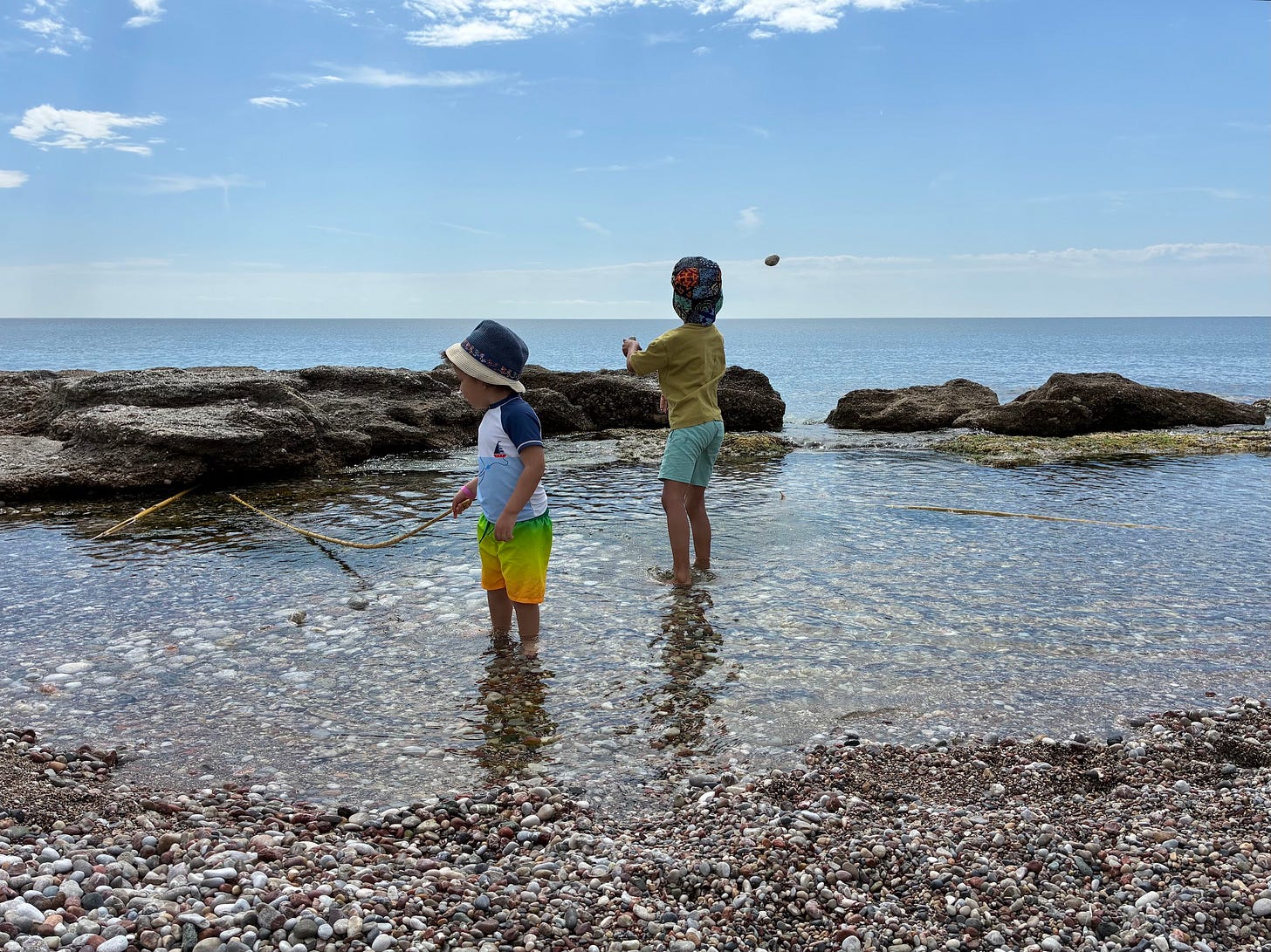
I spent a few very pleasant mornings reading on the beach while the boys hurled rocks into the distance. Although the toddler did then start hurling rocks at me, which rather spoiled the congenial mood. A Language of Dragons, by S. F. Williamson - I am not a YA/fantasy/dragons gal, but since the author of this enormously successful book is a friend, I wanted to give it a go. I loved it! It centres on language/linguistics, which I adored since I am a language enthusiast myself, and I loved the theme of maternal love in its various iterations. Knowing that Williamson is Catholic, I could definitely see how her faith shaped the themes in the story, even though it isn’t in any way written as a “Catholic novel”. I’m looking forward to reading the second book in the three-part series soon!
Chastity: Reconciliation of the Senses, by Erik Varden - I’m going to see Bishop Varden speak at an event in London this Saturday, so I wanted to read this - which had been on my shelves for a while - before that. I have to say that it didn’t quite land for me. His central thesis was beautiful and compelling, but the presentation was, for me, very convoluted, and I felt like it could reach a much wider audience if it was pared down significantly to essay length. I know people rave about Bishop Varden’s writing so maybe this was just the wrong thing to start with, but I admit I was a little disappointed.
Yesteryear, by Caro Claire Burke - pretty much everyone on the Internet has already written about this so I won’t say too much. I read it compulsively, but it left me with a rather icky feeling, akin to having just smoked a cigarette while drinking coffee. Like, that seemed like it was going to scratch an itch but it didn’t really and now I just feel gross. I agree with everything people have said about it failing to say anything interesting or useful about the “tradwife” phenomenon, but more than that, it just really lacked a good editor. There were many plot holes, characters that didn’t make any sense, and threads that seemed like they were meant to be picked up later on but then just got forgotten. I guess the hype around the book is running on the fumes of the ongoing tradwife discourse, but it really failed spectacularly to add anything worthwhile to the conversation. I can think of multiple ways that a really interesting, back-in-time novel could have been written about social media tradwives, but this just was not it.
I’m going to skip the final two sections that I usually tag onto this newsletter (“they’re reading” and “misc.”) because it’s already pushing 2,000 words and I don’t have anything groundbreaking to report under either of those subheadings. The really nice thing since turning off paid subs and making peace with the fact that I’m never going to find much success on Substack is that I don’t have any reason at all to feel like I ought to follow my self-imposed writing schedule or structure.
Oh, on that note, my latest rosary meditation post got zero engagement, so I’m on the fence about whether I’ll continue that series: on the one hand, I find it spiritually beneficial to write them, but on the other, it is low key soul destroying to spend a few hours writing something, releasing it to the Substack universe, only for no one at all to read it. So, I guess it depends on how much spare time I have and if the mood takes me. But then again, since no one read it, I guess no one is going to be any the wiser either way! In case I can entice you:
“The fact that Jesus’ risen body still bore the wounds of his Passion shows us that, in the words of Benedict XVI, “what has occurred […] will never be cancelled.” Resurrection does not blot out suffering and sorrow, but glorifies the scars that it leaves, transforming them into sources of new life. New life comes because of the pain we carry, not in spite of it.”
If you want to offer a one-off, non-rolling token of appreciation for these posts, you can do that here. A couple of people did last time I posted this newsletter, and I was really very touched by the kindness of the gesture.
Thanks so much! Gina x
A great read, as usual! I hope the Bishop Varden talk went well.
I love your description of boys running around until they fall over. So spot on! 😆 I started out my mothering adventure in an apartment, and we moved into a house in time to welcome our third boy. I was amazed how much less stressful the tantrums or naptime trials were when I didnt have a downstairs neighbor who worked nights.