

pondering these things: the first glorious mystery
the resurrection

This is going out late because life has been crazy, but it’s still Easter so it’s still a good time to meditate on the Resurrection. And if you want to be a card carrying Catholic, you have to talk regularly about the fact that Easter lasts for 50 DAYS, and that you should KEEP CELEBRATING. So really, me sending this out late is just helping you to be a better Catholic. You’re welcome.
May is the month that the Catholic Church honours Mary, so it’s a particularly good time to start trying to pray the rosary regularly. And while we’re here and talking about the rosary, I wanted to mention an app that I’ve started using called Rosario. You can either create your own group of five people, or it connects you with a group of other users, and it assigns you each a decade of the rosary to pray each day. It tells you the fruits of the mystery, a short meditation, and the option to pray with an audio of the prayers. Your group also sets intentions. Once you’re done, you click “I’ve prayed”, and “your” decade of the rosary is complete. I’ve found it useful for adding some accountability when I don’t feel like praying! (This isn’t sponsored, I just actually like it)
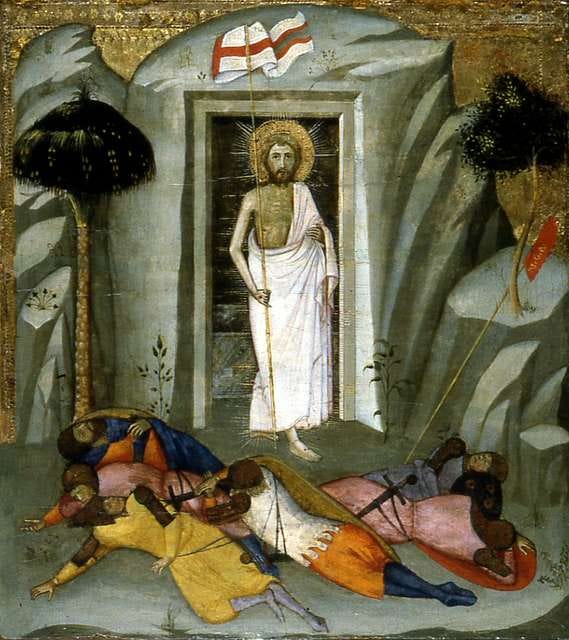
Anyway, this is a continuation of my series Pondering These Things, which reflects on the mysteries of the rosary through the lens of motherhood and family life. They are primarily personal, rather than theological, reflections. You can find my reflections on the Sorrowful Mysteries here:
The First Sorrowful Mystery: the Agony in the Garden
The Second and Third Sorrowful Mysteries: the Scourging at the Pillar + the Crowning with Thorns
The Fourth and Fifth Sorrowful Mysteries: the Carrying of the Cross + the Crucifixion
These reflections will come out in approximate keeping with the liturgical year:
January - March (Lent): Sorrowful Mysteries
April - June (Eastertide): Glorious Mysteries
July - September (Ordinary Time): Luminous Mysteries
October - December (Advent + Christmas): Joyful Mysteries
For instructions on how to pray the rosary, look here. For my post about how I built a daily rosary habit, look here.
The First Glorious Mystery: the Resurrection
Verses: Matthew 28: 1-10; Mark 16: 1-8; Luke 24: 1-12; John 20: 1-10
Fruit of the mystery: Faith
Traditionally prayed: Wednesday, Sunday
Resurrection, a (the?) core concept of Christianity, can easily be reduced to simply a shorthand for life after death; to mean the hard thing is not the end, that suffering and sorrow will not have the last word. That there’s hope beyond the grave. And all of these things are true, but the Gospel accounts of the Risen Christ tell us that there is something even more electrifyingly hopeful about Jesus’ bodily return to life than this.
The fact that Jesus’ risen body still bore the wounds of his Passion shows us that, in the words of Benedict XVI, “what has occurred […] will never be cancelled.” Resurrection does not blot out suffering and sorrow, but glorifies the scars that it leaves, transforming them into sources of new life. New life comes because of the pain we carry, not in spite of it.
This is an experience common to all humans, regardless of whether we conceptualise it as such, but mothers get a particular crash course in it. For those of us who carry our babies in our bodies, the actual, physical scars and afflictions of pregnancy and childbirth give way in a very literal sense to new life. Even when those babies are lost to miscarriage or stillbirth, our bodies have brought forth an eternally ensouled child through physical and emotional trial.
But mothers are also themselves resurrected by motherhood. The demands and struggles of being a mother - to a biological or adopted child, to a baby or teenager or adult or child that predeceases us - leave all kinds of literal and metaphorical wounds. From cracked and bleeding nipples, to the frayed nerves of enduring endless meltdowns, to the thanklessness of trying to guide a child towards what is good for them, to the frustration and anger and heartbreak wrought by teenage and adult children, the love of a mother is cheek-to-cheek with suffering from day one. Yet that suffering gives rise to the most particular and intense love on Earth: the love of a mother for her child. Whilst we might wish away the the crosses of mothering in realtime, we also know that the fact that we suffer for our children is precisely what allows us to love them to profoundly, to know a love that is not earned but flows freely, even hungrily, to our offspring who are often quite oblivious to it.
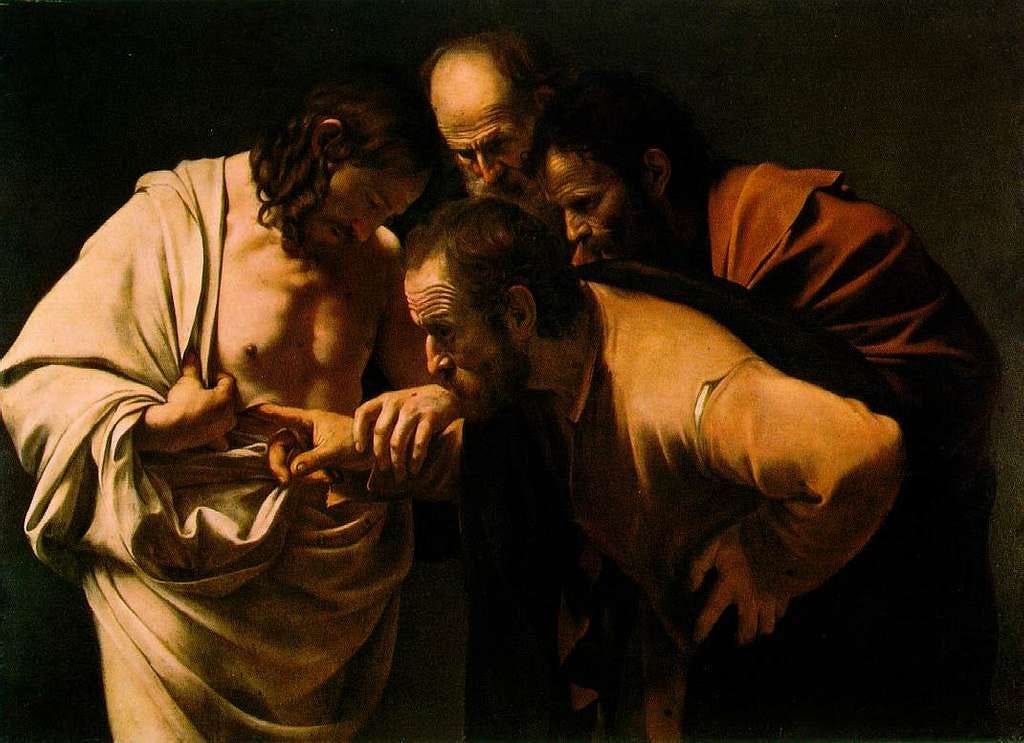
Caravaggio’s The Incredulity of Saint Thomas (above) is slightly comical, but there’s also something very moving about Christ humbly inviting his disciple to touch the parts of his body that evidence the suffering he endured out of love, and that ushered him into eternal life. St. Thomas reminds me of my kids, who often ask to see my c-section scar, and are amazed that this silver-white line that runs just a few inches across my pelvis is the site of their entry into the world. That scar bears witness to the way that the bodily suffering of a mother heralds a love that transcends the limits imposed by death.
Our hope is in the Resurrection not just because it assures us that the best is yet to come, but that the hardship that comes before that is not simply something we must endure while we wait. Life and love spring forth from our scars, making good the parts of our lives we most want to run from, folding us into the mystery of eternal life.
I’ll be back at the end of May with the second and third Glorious Mysteries: the Ascension + the Descent of the Holy Spirit. If you’d like to receive that, you can subscribe here:
I no longer have paid subscriptions, but if you’d like to offer a one time token of appreciation, you can do that here:
Thanks so much. Gina x